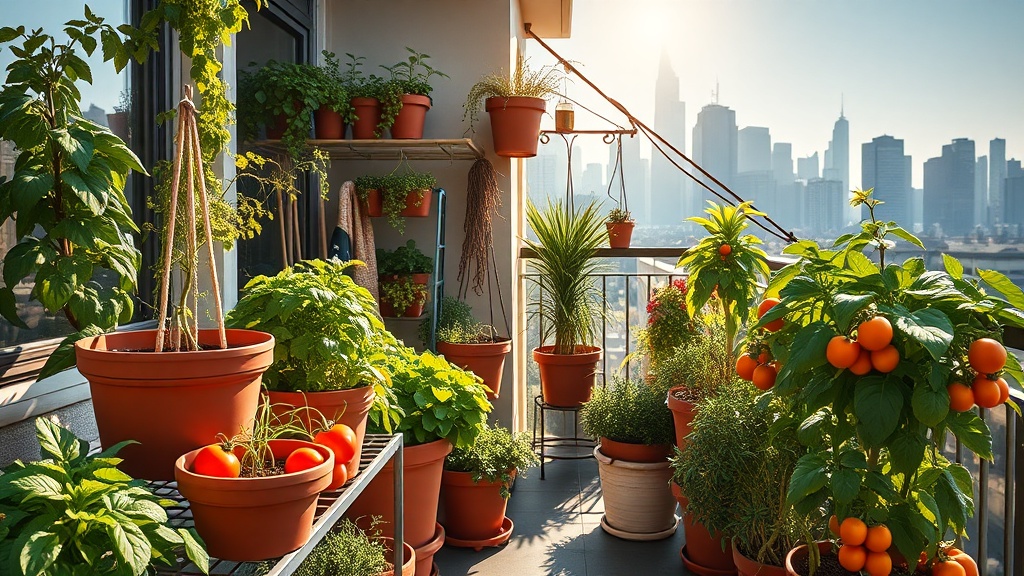
Urban Balcony Gardening: Maximize Your Small Space This Spring 2026

Ever looked at your cramped balcony and wondered if you could actually grow food there? Most city dwellers shrug it off as a pipe‑dream, but with a few practical tweaks you can turn that railing into a productive plot by the time the first tomatoes ripen.
Spring 2026 is finally here, daylight hours are stretching, and municipalities are pushing green‑space incentives. If you’ve ever thought, “so what’s the point of a balcony if I can’t grow anything?”, this guide is the no‑hype answer. I’ll walk you through the exact containers, soil mixes, and plant picks that survive the wind‑tunnel effect of high‑rise living, all without the fluff.
What Are the Key Constraints of an Urban Balcony?
Before you buy a dozen pots, you need to size up the real estate you have. Most balconies suffer from three issues:
- Wind exposure: Wind tunnels can dry soil in minutes.
- Sunlight variance: South‑facing gets full sun, north‑facing gets a mere 2‑3 hours.
- Weight limits: Building codes often cap loads at 50‑100 lb per square foot.
Understanding these constraints lets you avoid the classic mistake of over‑watering a windy slab or loading a balcony with a 200‑lb raised bed that the structure can’t support.
Which Containers Actually Work on a Balcony?
Container choice is the single biggest factor in balcony success. Here’s the quick‑check list:
- Material: Plastic is lightweight and retains moisture, fiberglass resists cracking, terracotta looks great but is heavy and porous.
- Size: Aim for 5‑10 gal (19‑38 L) pots for most herbs and leafy greens. Larger veggies like tomatoes need 15‑20 gal (57‑76 L) containers.
- Shape: Square or rectangular pots line up against railings, maximizing floor space. Avoid round pots that waste corner area.
- Drainage: Ensure a hole at the bottom and add a saucer to catch runoff — important for building maintenance.
My go‑to combo? A set of UV‑stabilized polypropylene squares (7 gal) stacked on a lightweight metal rack. They’re easy to move, cheap, and the rack lets you grow vertically, adding up to 30 % more planting area.
What Soil Mix Gives the Best Yield on a Small Scale?
Don’t reach for garden‑center “potting mix” and call it a day. Those blends are often too dense for limited root volume and dry out fast under balcony winds. I build a three‑part mix:
- Base: 50 % high‑quality peat‑free compost (e.g., Fine Gardening’s compost).
- Aeration: 30 % perlite or pumice for drainage and air flow.
- Nutrition: 20 % slow‑release organic fertilizer (e.g., Miracle‑Gro Organic).
Mix it in a bucket, moisten to a crumbly consistency, and you’ve got a medium that holds moisture without turning soggy — exactly what a wind‑blown balcony needs.
Which Plants Thrive on a Spring Balcony?
Not every vegetable loves a concrete slab. Pick varieties bred for container life and short growing seasons. Here’s the “starter kit” for a Spring 2026 balcony:
- Herbs: Basil ‘Spicy Globe’, cilantro, parsley, and thyme. They’re compact, tolerate partial shade, and you can snip fresh leaves daily.
- Leafy greens: ‘Buttercrunch’ lettuce, Swiss chard, and baby kale. They grow fast and can be harvested leaf‑by‑leaf.
- Fruit: Determinate tomato varieties like ‘Patio’ or ‘Tiny Tim’ (they stay under 3 ft). Also try dwarf strawberries (e.g., ‘Mara des Bois’).
- Root veg: Mini carrots (‘Thumbelina’) and radishes — these finish in under a month.
What matters is the “so what?”: each of these crops gives you a bite‑size harvest within the first 8‑10 weeks of Spring, keeping the momentum going and proving the balcony isn’t just décor.
How Do I Manage Water Efficiently Without a Full‑Time Gardener?
Watering is the Achilles heel of balcony gardens. Too much and you drown roots; too little and you get a dusty wilt. My workflow:
- Morning check: Touch the top inch of soil. If dry, water.
- Self‑watering inserts: Use a ceramic “wick” pot that draws water from a reservoir placed on the balcony floor.
- Rain catch: If your building allows, place a small rain barrel on the balcony rail to supplement watering after a spring shower.
These tricks cut watering time to under 5 minutes a day and keep the plants hydrated even when wind spikes.
What City Programs Can I Tap Into for a Greener Balcony?
Many municipalities have launched “Urban Greening Grants” this Spring. For example, the Chicago Department of Streets and Sanitation offers a $150 rebate for each resident who installs a certified rain‑water harvesting system on a balcony (see official program page). Sign up before April 15 to lock in the funding.
Other cities — Portland, Seattle, and Austin — run “Balcony Biodiversity Challenges” with free seed packets for participants. Keep an eye on your local government’s sustainability portal; a quick 2‑minute search can net you free compost or discounted containers.
What Are the Common Mistakes and How Do I Avoid Them?
Even with a solid plan, newcomers trip up. Here are the three most frequent errors and the fix‑it:
- Over‑watering: The soil looks wet but the roots are actually drying out from wind. Solution: add a layer of mulch (coarse coconut husk works well) to slow evaporation.
- Choosing the wrong sun exposure: Planting tomatoes on a north‑facing balcony guarantees a flop. Solution: use a reflective Mylar sheet behind the pot to bounce extra light onto the plant.
- Ignoring weight limits: Stacking a full‑size raised bed on a small balcony can breach building codes. Solution: keep containers under 15 lb each and distribute weight evenly across the rail.
What’s the Bottom Line for a Spring 2026 Balcony Garden?
If you follow the steps above — size your space, pick the right containers, blend a breezy‑friendly soil, choose fast‑growing varieties, and tap city incentives — you’ll harvest fresh herbs, greens, and maybe a few tomatoes before the summer heat peaks. It’s a low‑cost, low‑risk way to prove that even a concrete slab can feed a busy professional.
Ready to get started? Grab a set of 7‑gal polypropylene squares, mix the three‑part soil, and plant your first basil seedling this weekend. You’ll be surprised how quickly the balcony turns from a balcony into a backyard.
Takeaway
Urban balcony gardening isn’t a gimmick; it’s a practical tool for sustainable living in a city that’s finally encouraging green roofs and micro‑farms. Start small, respect wind and weight constraints, and you’ll have fresh produce on your table by late May. Remember: look at the plumbing, cut the hype, and let the balcony do the work.