The Retention Problem Nobody Talks About: Women in Industrial Logistics Tech

Let's look under the hood at a problem most industrial tech conversations deliberately avoid.
Every Q1, as International Women's Day approaches, you'll see a wave of LinkedIn posts from operations directors and tech vendors celebrating their latest diversity initiative. A new recruiting pipeline. A scholarship program. A "Women in Logistics" summit with a $2,800 ticket price. The photography is always the same: hard hats, high-vis vests, and smiling faces in front of a conveyor belt that probably cost $400,000 to install.
What you won't see: the retention data.
I've spent over a decade moving through logistics facilities across the Midwest — distribution centers, fulfillment hubs, third-party warehousing operations. I've watched companies hire ambitious, technically sharp women into warehouse management, systems integration, and operations technology roles. And I've watched a disproportionate number of them leave within 18 months. Not because the pipeline was bad. Because the floor wasn't built for them — and neither was the culture around the technology they were supposed to run.
The Infrastructure Problem Is Literal
Start with the physical environment, because nobody wants to.
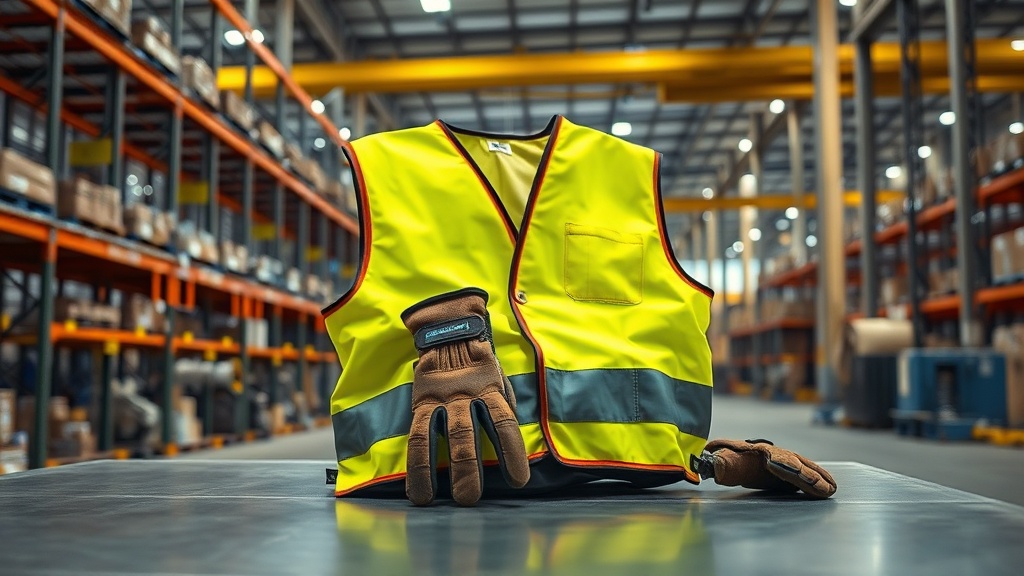
Standard warehouse PPE — gloves, safety shoes, high-vis vests — is still largely sized and designed for male body types. This isn't a marginal inconvenience. Ill-fitting PPE is a safety issue, and in facilities running AGVs (automated guided vehicles) or working adjacent to robotic picking systems, a vest that doesn't fit correctly or gloves that reduce fine-motor feedback creates real exposure. NIOSH has published guidance on sex-based ergonomic differences and PPE fit for years. Most facilities I've been in still have one size range in the supply cabinet.
Ergonomic workstation design is the same story. Picking station heights, RF scanner grip profiles, reach distances on put-wall slots — these are predominantly calibrated to the 50th percentile male worker, which means they're misaligned for a significant portion of the workforce by default. You can install a $1.2M warehouse management system on top of a poorly ergonomically-configured facility and you've just given people a new way to accumulate repetitive strain injuries faster.
The workforce cost is documented, if not always compiled neatly in one place. SHRM and APICS have both published data on ergonomic misalignment as a driver of attrition — turnover costs run in the range of $3,500 to $10,000 per floor-level employee depending on role complexity, per workforce development estimates that circulate widely in supply chain management literature. For a systems role where the learning curve on a new WMS is 6–9 months, you're looking at multiples of that.
The Cultural Layer Around the Tech
Logistics technology adoption — and this is the part vendor decks never mention — is a social event as much as a technical one. Implementations require buy-in from floor supervisors, leads, and experienced pickers who've been doing the job for 15 years and aren't particularly interested in being told their instincts are now encoded as a constraint in someone's algorithm.
Women who enter logistics operations tech roles — as implementation leads, WMS analysts, process engineers — frequently report the same pattern. They've got the technical credentials. They understand the system. But they spend a significant portion of their day re-establishing credibility with floor supervisors who default to questioning their read of the data, or routing around them to escalate to a male colleague.
This dynamic has a name in workplace research: credibility taxation — the invisible extra labor of having your competence repeatedly questioned in a male-dominated environment. The Society of Women Engineers has tracked retention issues in engineering and industrial fields for years, and the broader academic literature on women in technical workplaces (including work by researchers like Nadya Fouad, whose longitudinal studies on women leaving engineering are probably the most cited in this space) consistently identifies this kind of competence-questioning — not pay, not workload — as the leading driver of attrition. I'm applying that research to a warehouse context, where, in my direct observation, the dynamic is both real and operationally costly. That's an interpretive leap I'm flagging explicitly.
The practical effect: you lose the people who are best at translating between the technology and the human operation. Women who succeed in logistics tech are, in my observation, disproportionately strong at that translation work — understanding both the system's logic and the floor worker's reality. When the culture makes that role untenable, the implementation suffers. The AI pilot gets blamed. The vendor gets fired. The real problem walked out the door eight months earlier and everyone acts surprised.
What Actually Moves the Needle
I'm not interested in writing another piece that ends with "we need more pipeline programs." Pipeline is not the bottleneck. Retention is.
Here's what the facilities I've seen handle this well actually do:
1. Redesign the physical environment before the next tech deployment.
Before you spend $500k on a new slotting optimization system, spend $40k on a proper ergonomic audit. Adjustable-height workstations, PPE in the correct size range, RF scanner grip options. This is table stakes for keeping any worker — the productivity evidence on ergonomic alignment is consistent across workforce studies, and the operational efficiency framing is usually what gets it through the budget process.
2. Make credibility structure explicit in the implementation charter.
When a new technology project goes live, the implementation lead has decision authority. Write it down. Communicate it to supervisors before go-live, not during a conflict. I've seen this simple formalization cut implementation friction significantly — it doesn't solve cultural problems permanently, but it removes the ambiguity that bad actors exploit.
3. Measure attrition by role and demographic, not headcount.
Most facilities track overall turnover as a single number. Break it down. If your 18-month attrition rate for women in systems and tech roles is materially higher than your rate for male peers in equivalent positions, you have a retention problem that a recruiting initiative will not fix. You're refilling a leaking bucket.
4. Build mentorship structures that are operational, not social.
The best mentorship I've seen in logistics operations is job-shadowing across functional areas — pairing a systems analyst with an experienced floor supervisor for a week, not as a cultural exchange, but as operational cross-training. It builds mutual credibility organically, in context, without the performative quality of a formal mentorship program. The floor supervisor understands how the system reads their operation. The analyst understands what the algorithm misses. Both of them are better at their jobs afterward.
The ROI Is Not Abstract
Here's the math that should end any hesitation about this.
Industry estimates for the fully-loaded cost of replacing a mid-level logistics tech or systems role — WMS analyst, process engineer, implementation specialist — run $45,000–$85,000 per departure, depending on scope and institutional knowledge lost. (These are estimates widely cited in supply chain workforce development literature; your facility's actual number depends on recruiting fees, onboarding structure, and how fast a replacement reaches full productivity.) That's recruiting, onboarding, productivity ramp, and error rates during the learning curve.
A mid-sized 250-person distribution operation with 20% annual attrition in tech roles is burning real money in replacement costs — by those estimates, potentially $500,000 to $1.2M annually. If half of that attrition is driven by preventable retention failures — ergonomic design, culture, credibility structure — you're looking at a recoverable loss that no vendor dashboard is tracking.
The ergonomic audit costs $40k. The implementation charter is a Word document. The cross-functional shadowing program costs supervisory time.
This is not a values argument, though the values argument is also correct. It's an operations argument. The facilities that treat women in logistics tech roles as an afterthought are running a structural inefficiency they've decided to normalize. The ones that don't are building institutional knowledge that compounds.
The board will not have a slide for this at the Q1 review. There's no vendor selling "credibility structure consulting" or "ergonomic attrition reduction." The ROI isn't packaged neatly and there's no ribbon-cutting photo.
But the PPE cabinet still has two sizes, the workstation heights are still set for someone six inches taller, and the most technically capable person on your last implementation just sent their resume somewhere else.
Look under the hood before the next platform purchase. The problem you're paying to automate around might be the one that's actually costing you.