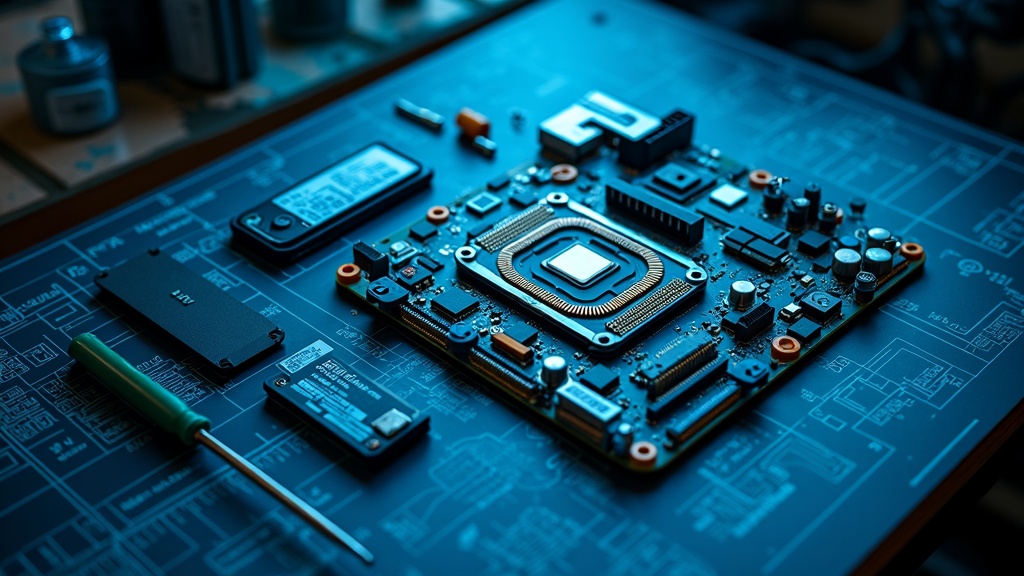
The Repairability Index: Why Your $2,000 Laptop Is Designed to Die

In 2019, I watched a $40,000 industrial scanner die on a loading dock in January. The failure wasn't the optics. It wasn't the battery. It was a proprietary firmware lock that bricked the device when the manufacturer went under. The hardware was fine. The software decided otherwise.
That's when I started tracking what I call the Repairability Index—a simple lens for evaluating whether a tool actually serves you, or whether you're just leasing a countdown timer dressed as a purchase.
The $50 Billion E-Waste Problem Nobody Talks About
Global e-waste hit 62 million metric tons in 2022. That's enough dead electronics to fill a line of 40-ton trucks circling the equator. The response from manufacturers? Thinner devices. Glued batteries. Proprietary screws. Subscription-based features.
Here's the reality: Modern consumer electronics are engineered for obsolescence, not endurance. And it's not a conspiracy theory—it's right there in the quarterly earnings calls. Recurring revenue from services and forced upgrades beats one-time hardware sales.
Case Study: The Right-to-Repair Battle
New York's Digital Fair Repair Act (2023) was supposed to be a watershed moment. It required manufacturers to provide diagnostic tools, schematics, and replacement parts. So what did the industry do?
They lobbied. They watered down the bill. And then—this is the part that should infuriate anyone who's ever held a screwdriver—they started selling "authorized repair" as a premium service.
Apple's Self Service Repair program launched to headlines about "consumer choice." The reality? You rent a $1,200 toolkit for a week, pay OEM prices for parts that cost pennies to manufacture, and if you break something during the repair, your warranty is void. That's not repairability. That's repair theater.
The Three Pillars of True Repairability
After a decade in industrial logistics—where downtime is measured in thousands of dollars per hour—I've learned to evaluate hardware on three criteria. Ignore the marketing. Look at the plumbing.
1. Documentation Accessibility
Can you get the schematic? The BOM (Bill of Materials)? The firmware source code? If the answer involves an NDA, a "certified technician," or a support ticket that disappears into the void, you don't own that device. You're renting it until the manufacturer decides otherwise.
The gold standard: Framework Laptop. They publish their entire electrical and mechanical design on GitHub. You can 3D print replacement parts. You can buy every component individually. When they update the mainboard, you swap it into the same chassis. No e-waste. No forced obsolescence.
2. Parts Standardization
Proprietary connectors are a trap. If your laptop uses a custom battery form factor that only the manufacturer produces, they control your device's lifespan. If they discontinue that battery—or double the price—you're buying a new laptop.
What to look for: Standard connectors (JST, Molex), common battery form factors (18650, 21700 cells), and M.2 slots instead of soldered storage. These aren't technical niceties. They're insurance policies against corporate decisions made five years from now.
3. Tooling Democratization
Apple's pentalobe screws weren't designed for security. They were designed to make you feel inadequate. The message: "This is too complex for you. Go to the Genius Bar."
Real repairability means standard Phillips, Torx, or hex fasteners. It means repair guides written for humans, not just factory technicians. It means iFixit can score your device above a 4 out of 10 without a heat gun and a prayer.
The Boring Truth: Industrial Hardware Gets This Right
Here's what Silicon Valley won't tell you: the most repairable technology on Earth isn't sold at Best Buy. It's running in factories, warehouses, and logistics hubs.
Zebra's industrial handhelds—the ones you see in Amazon fulfillment centers—are modular by design. Batteries swap in five seconds. Screens are user-replaceable. The MTBF (Mean Time Between Failures) is measured in years because downtime costs more than the hardware.
Honeywell's rugged tablets use standard components. Panasonic's Toughbooks have maintained backward-compatible docking stations for over a decade. These devices cost more upfront. But over a 7-10 year lifecycle, they cost a fraction of their consumer-grade equivalents.
The economics are simple: When your customer is a logistics director who gets fired for unplanned downtime, repairability isn't a feature. It's a requirement.
Impact Scorecard: The Framework Laptop
Repairability Assessment
- Accessibility: 9/10 — Full documentation, modular design, user-swappable everything.
- Utility: 8/10 — Performance matches mainstream ultrabooks. Limited to Intel/AMD, no ARM options yet.
- Longevity: 9/10 — Designed for 10+ year lifecycles. Upgrade, don't replace.
Verdict: The first laptop that treats you like an owner, not a revenue stream.
The "So What" for Your Next Purchase
Before you buy that sleek, sealed, "innovative" device, ask three questions:
- Can I replace the battery without a heat gun? If no, you're buying a device with a built-in expiration date.
- Can I upgrade the storage or RAM? If it's soldered, you're locked into today's specs for the device's entire life.
- Will parts be available in five years? If the manufacturer controls the supply chain, they control your device's lifespan.
The answers won't be in the marketing materials. They'll be in teardown videos, iFixit scores, and community forums where people actually try to fix things.
The Long View
Climate change won't be solved by carbon capture moonshots. It'll be solved by boring stuff—keeping devices in service longer, designing for disassembly, and ending the artificial scarcity of replacement parts.
The EU's Ecodesign for Sustainable Products Regulation (coming 2026) will mandate repairability scores on electronics. France already requires a "repairability index" on consumer devices. The US is trailing, but the direction is clear: forced obsolescence is becoming a liability.
As consumers, we have more power than we think. Every purchase is a vote. Every repair is a statement. And every time you choose a Framework over a MacBook Air, a Fairphone over an iPhone, or refurbished over new, you're voting for a world where technology serves people—not the other way around.
The tools we use shape the world we build. Let's build one where things last.
Want to dig deeper? Check out iFixit's repairability scores before your next tech purchase. The five minutes you spend there might save you $1,000 and a trip to the landfill five years from now.