Smart Thermostats: Do They Actually Save You Money or Just Make You Comfortable?

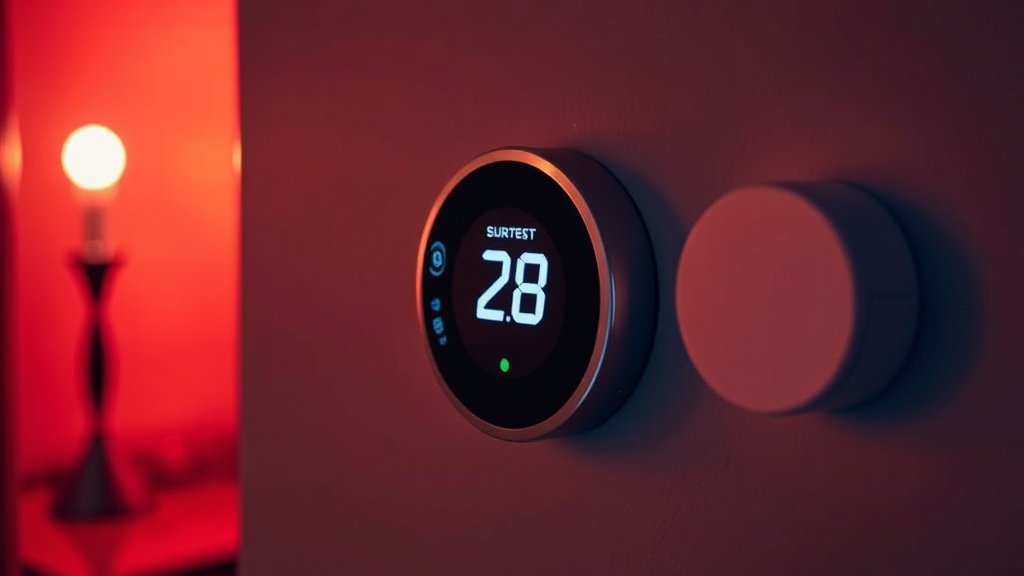
Your heating bill arrives in January. It's $280—up from $195 last year. You stare at the Nest on your wall, that sleek circle of glass and promise, and wonder: did I just pay $250 for a digital thermostat with an app? The utility company blames rising rates. Your neighbor swears his Ecobee cut his bill in half. Meanwhile, you're still adjusting the temperature manually because the "smart" schedule keeps turning the heat down when you're actually home.
This is the reality gap in home climate control. Smart thermostats are everywhere—Best Buy displays them prominently, utility companies subsidize them, and your tech-forward coworker won't stop talking about his Alexa integration. But the fundamental question—do they actually save money?—gets buried under feature lists and slick marketing. After digging through Energy Star reports, consumer studies, and the actual hardware inside these devices, here's what the numbers and real-world usage actually show.
What's Really Inside a Smart Thermostat?
Strip away the touchscreens and Wi-Fi radios, and you're looking at a fairly basic piece of hardware. A smart thermostat contains a temperature sensor (usually a simple thermistor), a humidity sensor in better models, a low-power processor, and a relay to switch your HVAC system on and off. The "smart" part isn't revolutionary hardware—it's the software layer that attempts to learn your habits and optimize heating and cooling cycles.
The learning algorithms vary by brand. Google's Nest uses occupancy sensors and historical data to build schedules. Ecobee relies on remote sensors you place around your home to detect temperature variations room by room. Honeywell's offerings lean on geofencing—tracking your phone's location to determine when you're away. Each approach has trade-offs, and none of them magically make your furnace more efficient. They simply try to reduce runtime by heating or cooling only when necessary.
Here's the uncomfortable truth most reviews gloss over: if your home has poor insulation, single-pane windows, or an aging HVAC system, a smart thermostat won't fix any of that. It's not a bandage for fundamental efficiency problems. At best, it optimizes an already-functional system. At worst, it gives you prettier graphs of your energy waste.
Do Smart Thermostats Actually Lower Your Energy Bills?
The industry loves to cite a study from Energy Star claiming programmable thermostats save homeowners 8% annually on heating and cooling. But that figure bundles traditional programmable units with smart models—and it's based on ideal usage scenarios where homeowners actually set schedules and let the device work. Reality is messier.
A comprehensive study published in Nature Energy tracked real-world usage across thousands of homes and found the savings were real—but modest. The average household saved roughly $50 to $100 annually on heating and cooling. That puts the payback period for a $200-$250 smart thermostat at two to four years, assuming installation goes smoothly and you don't need a C-wire adapter (add another $25-$50 and potentially an electrician visit).
The catch? Savings depend entirely on your previous behavior. If you were diligent about manually adjusting a traditional thermostat—turning it down before bed, dropping it when leaving for work—you might see minimal improvement. The biggest gains come from households that kept temperatures constant regardless of occupancy or time of day. Smart thermostats excel at automation for the forgetful, not magic efficiency for the already-disciplined.
There's also the rebound effect to consider. Some users, comforted by the promise of efficiency, actually increase their target temperatures—keeping the house warmer in winter because they trust the "smart" system to optimize elsewhere. The device saves energy, but behavior changes consume those savings. It's a pattern researchers have documented across energy-efficient appliances: when operating costs drop, consumption often rises to meet the new comfort threshold.
Which Smart Thermostat Features Actually Matter?
Walk into a home improvement store and you'll see feature lists longer than your arm: voice control, air quality monitoring, geofencing, humidity sensing, energy reports, HVAC health monitoring, adaptive recovery. Most of this is noise. Here's what actually impacts your experience and (potentially) your bills.
Remote sensors—as Ecobee offers—are genuinely useful if you have hot or cold spots in your home. Traditional thermostats read temperature from a single location, usually a hallway, and assume the whole house matches. Remote sensors let the system average readings or prioritize occupied rooms. If your bedroom runs five degrees cooler than your living room, this feature solves a real problem that directly affects comfort and can reduce the tendency to overheat the whole house.
Geofencing sounds clever—your thermostat detects when your phone leaves a defined perimeter and adjusts accordingly. In practice, it's finicky. Drive to the grocery store fifteen minutes away and your system might cycle into away mode prematurely. Work from a coffee shop for an afternoon and you return to a cold house. Most users disable geofencing within the first month and rely on schedules instead.
Energy reports generate pretty charts showing your usage patterns. They're satisfying to look at and occasionally surface insights—like realizing your system runs 40% longer on weekends. But the actionable advice is usually generic: "Consider lowering your temperature at night." You didn't need a $250 device to tell you that.
HVAC monitoring is an underrated feature gaining traction. Higher-end units track runtime patterns and alert you when something seems off—an air filter that needs changing, a compressor working harder than usual. It's not foolproof (false positives happen), but catching a developing HVAC problem early can prevent a $500 service call. Think of it as basic preventive maintenance, not revolutionary technology.
Is Installing a Smart Thermostat Worth the Hassle?
Here's where the marketing smooths over some rough edges. Installation ranges from "ten minutes with a screwdriver" to "call an electrician immediately" depending on your home's wiring. Older systems often lack a C-wire (common wire) that provides continuous power to smart thermostats. Some units, like certain Nest models, can work without one by periodically charging from the heating/cooling wires—but this causes issues on some systems, including random shutdowns or battery-draining failures in cold weather.
If you don't have a C-wire and your chosen thermostat requires one, you're looking at running new low-voltage wiring through walls or using a power adapter that plugs into a nearby outlet. Neither option is particularly elegant. Professional installation typically runs $100-$200, which pushes your payback timeline even further.
Then there's the compatibility dance. Heat pumps, multi-stage systems, and homes with separate heating and cooling units need specific wiring configurations. The compatibility checkers on manufacturer websites are optimistic—designed to maximize sales more than prevent returns. Read the actual wiring requirements in the manual, not just the marketing compatibility tool.
Once installed, the user experience varies dramatically by ecosystem. Google's Nest integrates smoothly with Google Home but plays poorly with HomeKit. Ecobee supports everything but requires more initial configuration. Honeywell's app receives consistent complaints about sluggishness and confusing interfaces. You're not just buying a thermostat—you're buying into an ecosystem that will shape your daily interactions with the device.
The Verdict: Who Should Actually Buy One?
Smart thermostats make sense for specific households and are unnecessary luxuries for others. You'll likely see genuine value if: your schedule is irregular (making manual programming tedious), you have notable temperature variations between rooms (justifying remote sensors), or you're the type to forget adjusting the thermostat before vacations. The convenience of remote control—warming the house before you arrive home on a cold evening—is legitimate quality-of-life improvement, even if it doesn't always translate to bill savings.
Skip it if: you're already diligent about manual adjustments, your HVAC system is nearing replacement (install a smart thermostat on the new unit instead), or your home has significant efficiency problems that need addressing first. A $200 thermostat won't fix $2,000 worth of insulation gaps.
The honest assessment? Smart thermostats are convenience devices with modest efficiency benefits, not magic money-saving machines. They automate the tedious parts of climate control reasonably well. They'll reduce your energy use if you let them—and if your current habits are wasteful. But that sleek circle on your wall won't insulate your attic or upgrade your furnace. It's a tool, not a transformation. Buy it for the right reasons, and you'll be satisfied. Buy it expecting to slash your utility bills in half, and you'll be staring at that January statement with the same disappointment.