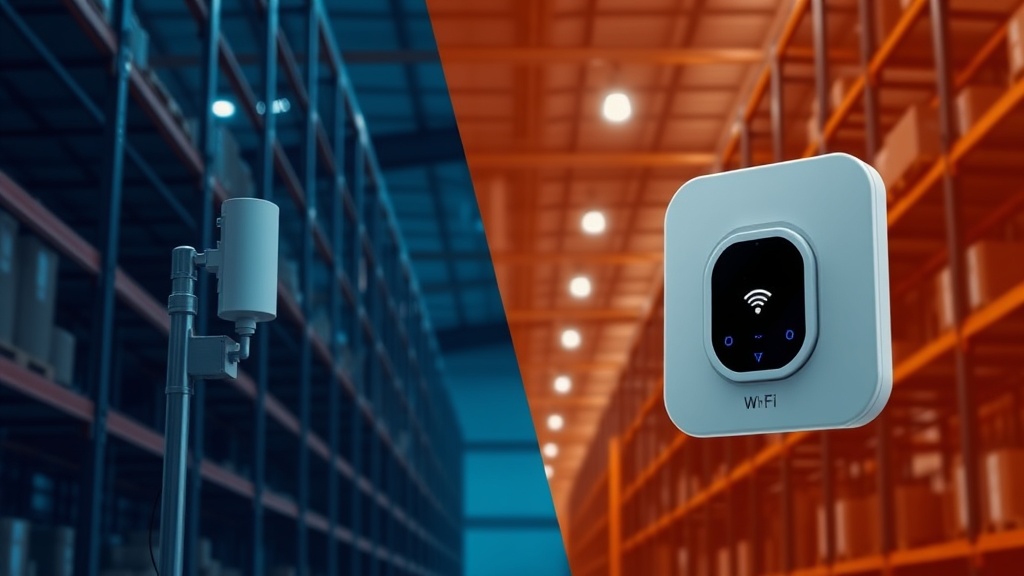
Private 5G vs Wi‑Fi 7: Which Warehouse Connectivity Wins in 2026?

Hook
You’ve heard the buzz: “Private 5G is the future of warehouse connectivity.” You’ve also read that “Wi‑Fi 7 finally solves the latency nightmare.” But when the dust settles, which network actually delivers the uptime, speed, and cost balance you need on the warehouse floor?
Context
I’m Marcus, the “no‑hype” voice behind *Future Focus*. I spend my days tearing through white papers and vendor decks so you don’t have to. In the last few weeks we’ve explored drone delivery, AI‑driven inventory tools, and the hidden costs of automation. Now it’s time to cut through the hype around the two hottest connectivity contenders and give you a clear, actionable roadmap.
What Are the Core Differences Between Private 5G and Wi‑Fi 7?
| Feature | Private 5G | Wi‑Fi 7 |
|---|---|---|
| Spectrum | Licensed (sub‑6 GHz) or unlicensed (mmWave) | Unlicensed 2.4 GHz / 5 GHz / 6 GHz |
| Latency | 1‑2 ms (ultra‑reliable) | 3‑5 ms (still low) |
| Throughput | Up to 10 Gbps per cell (mmWave) | Up to 46 Gbps aggregate (multi‑link) |
| Coverage | ~200 m per small cell, needs careful planning | ~30‑40 m per AP, easier to blanket a large floor |
| Device Density | 10 k+ devices per cell | 2 k‑3 k devices per AP |
| Security Model | SIM‑based authentication, end‑to‑end encryption | WPA3‑Enterprise, optional 802.1X |
| Typical CAPEX | $150‑$250 k for a 100 k sq ft pilot | $40‑$80 k for a comparable Wi‑Fi 7 rollout |
| OPEX | Managed services, spectrum fees | Mostly internal IT ops, lower recurring fees |
Why Those Numbers Matter on the Warehouse Floor
- Latency – Autonomous forklifts and edge‑AI vision systems need sub‑5 ms response times to avoid collisions. Private 5G’s tighter latency can shave milliseconds off the control loop, translating into measurable safety gains.
- Device Density – Modern warehouses host thousands of IoT sensors, RFID readers, handheld scanners, and AR glasses. Wi‑Fi 7’s higher device per AP capacity can keep you from oversubscribing a single cell.
- Coverage – If you have a sprawling, high‑bay layout, a few strategically placed 5G small cells can cover the whole floor with fewer blind spots than a dense Wi‑Fi AP grid.
When Should You Choose Private 5G?
- Ultra‑Low Latency is Non‑Negotiable – If you’re running collaborative robots (cobots) that need deterministic response, 5G’s 1 ms latency edge gives you a safety buffer.
- High‑Throughput Edge Computing – When you stream raw video from dozens of AI cameras to an on‑premise server, the raw bandwidth of mmWave 5G can beat Wi‑Fi’s shared medium.
- Future‑Proofing for 5G‑Only Devices – Some newer sensor families (e.g., 5G‑enabled LiDAR) only talk over cellular. Deploying a private network now avoids a later retrofit.
Quick‑Hit Checklist: Is Private 5G Right for You?
- [ ] You have ≥ 3 ms latency tolerance for critical automation.
- [ ] Your budget can absorb a higher CAPEX for a five‑year ROI plan.
- [ ] You need carrier‑level SLA guarantees (e.g., 99.999% uptime).
- [ ] Your regulatory environment allows licensed spectrum use.
If you answered “yes” to most, start a pilot with a single small‑cell vendor (Nokia, Ericsson, or Samsung). Keep the pilot limited to a high‑value zone—say, the inbound sorting area—so you can measure real‑world latency and throughput before scaling.
When Is Wi‑Fi 7 the Better Bet?
- Tight Budget, Fast Deployment – Wi‑Fi 7 APs are off‑the‑shelf, and you can install them in a weekend. No carrier contracts to negotiate.
- Mixed‑Use Environments – Staff tablets, AR glasses, and handheld scanners all speak Wi‑Fi. A single network keeps IT simple.
- Legacy Compatibility – If you already have a Wi‑Fi 6 backbone, the upgrade path to Wi‑Fi 7 is a firmware swap on most APs, saving you time and money.
Quick‑Hit Checklist: Is Wi‑Fi 7 Your Go‑To?
- [ ] You need ≤ 5 ms latency (acceptable for most AGVs and inventory robots).
- [ ] Your device mix is heavily Wi‑Fi‑centric (handhelds, tablets, AR).
- [ ] You’re aiming for sub‑$100 k rollout cost.
- [ ] You prefer in‑house management over a carrier‑managed service.
How to Run a Side‑by‑Side Pilot (5‑Step Guide)
- Define the KPI Set – Latency, packet loss, throughput, and total cost of ownership (TCO) over 12 months.
- Select a Test Zone – Choose a 20,000 sq ft area with a mix of high‑bay racks and open floor.
- Deploy One Small‑Cell & Four Wi‑Fi 7 APs – Keep the hardware count comparable.
- Run Real‑World Workloads – Connect a fleet of cobots, a set of AI cameras, and a handful of staff devices. Capture metrics continuously.
- Analyze & Decide – Use a simple spreadsheet: weight latency 30%, device density 25%, CAPEX 20%, OPEX 15%, security 10%. The higher score wins for your specific use case.
Pro tip: Use the Wi‑Fi 7 vs Private 5G comparison chart from our earlier post as a baseline. It already contains the raw numbers you’ll need for the spreadsheet.
Common Pitfalls and How to Avoid Them
| Pitfall | Why It Happens | Fix |
|---|---|---|
| Over‑estimating 5G coverage | Assuming a single small cell blankets the whole floor. | Conduct a site‑survey with a spectrum analyzer; plan overlapping cells. |
| Under‑budgeting Wi‑Fi 7 backhaul | Forgetting that 40 Gbps uplink may need fiber upgrades. | Include fiber or high‑capacity Ethernet in your CAPEX estimate. |
| Neglecting security hardening | Relying on default WPA3 settings for critical robots. | Deploy 802.1X with certificate‑based auth; audit regularly. |
| Mixing legacy Wi‑Fi 6 devices | Older devices can drag down overall network performance. | Segregate legacy devices onto a dedicated VLAN or upgrade them. |
Takeaway – Choose the Network That Matches Your Real‑World Constraints
- If latency, bandwidth, and carrier SLA are your deal‑breakers, go private 5G—just be ready for a bigger upfront spend and a more involved rollout.
- If you need a fast, cheap, and flexible solution that works with existing staff devices, Wi‑Fi 7 is the pragmatic choice.
Either way, run a 5‑step pilot before committing to a full‑scale rollout. The data you collect will save you from a costly mis‑step later.
Internal links you might find useful:
- Warehouse Connectivity Strategy 2026: Wi‑Fi 7 vs Private 5G – deep dive on the raw numbers.
- Edge AI in Warehouse Robotics 2026 – What the Real Performance Numbers Look Like – why low latency matters.
- 5 Hidden Costs of Warehouse Automation That Drain Your Budget – factor those into your TCO.
External sources:
- IEEE 802.11be (Wi‑Fi 7) specification – IEEE.org
- GSMA Private 5G Overview – GSMA.com
- IDC Forecast: Global Private 5G Market 2023‑2027 – IDC.com
If you’ve already started a connectivity upgrade, drop a comment with the results. I’ll add them to the next update so the community can learn from real‑world data.