Portable Power Stations in 2026: What the Rated Capacity Never Tells You

Portable Power Stations in 2026: What the Rated Capacity Never Tells You
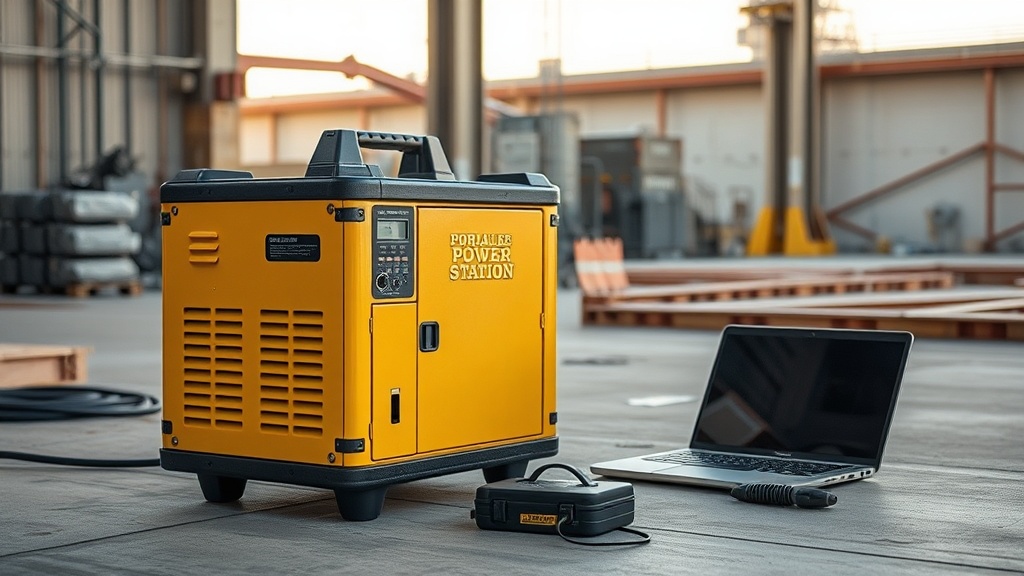
Everybody fixates on the watt-hour number printed on the box. "2,048Wh!" "3,000Wh!" The bigger the number, the better the unit. Right?
Not exactly. After twelve years managing logistics operations where we ran barcode scanners, label printers, and laptops off portable power during dock reconfigurations, I can tell you: the number on the spec sheet and the number your devices actually receive are two different conversations.
The Efficiency Tax Nobody Advertises
Every portable power station loses energy converting its stored DC power into the AC your devices need. This is called inverter efficiency, and it typically runs between 85% and 92%. That means your 2,000Wh unit might deliver 1,700 to 1,840Wh to the thing you plugged in.
ZDNET's testing methodology confirms this: they use external power meters to measure what actually flows out, not what the screen says. The gap is real, and it compounds. Run a device that draws power inconsistently — like a mini fridge cycling its compressor — and efficiency drops further because the inverter handles partial loads less efficiently.
Outdoor Life's 2026 testing noted one unit's battery percentage dropped from 100% to 73% in the first nine minutes before stabilizing. That is not a defect. That is how lithium cells report state-of-charge under sudden load, and it panics people who have never seen it before.
LiFePO4 Won. Move On.
If you are still considering a portable power station with NMC (nickel manganese cobalt) cells, stop. LiFePO4 — lithium iron phosphate — is the standard chemistry for 2026, and for good reasons:
- Cycle life: 3,000 to 4,000 charge cycles versus 500 to 800 for NMC. That is not a marginal improvement; that is a different product category.
- Thermal stability: LiFePO4 does not experience thermal runaway the way NMC can. On a 95-degree warehouse floor or a July job site, this matters.
- Ethics: Outdoor Life flagged this directly — significant human rights concerns around cobalt mining in the DRC supply NMC batteries. LiFePO4 avoids cobalt entirely.
The only tradeoff is energy density. LiFePO4 units weigh more per watt-hour. If you are backpacking, that matters. If you are loading it into a truck bed or keeping it in a garage, it does not.
The Three Tiers That Actually Matter
Forget the marketing segmentation. Here is how portable power stations break down for practical use in 2026:
Tier 1: The Desk Companion (300–600Wh)
Charges laptops, phones, and small monitors. Good for working from a coffee shop during an outage or keeping communications alive during a storm. Goal Zero's Yeti 300 earns mention here for its IPX4 water resistance and ability to operate down to -4°F, which is rare at this size. Real-world runtime: roughly 4–8 laptop charges depending on your machine.
Tier 2: The Job Site / Home Backup (1,000–2,000Wh)
This is where the market is most crowded and most confusing. The EcoFlow Delta 2 Max, Bluetti AC200L, and Jackery Explorer 2000 Plus all cluster around 2,000Wh with 2,400W output (Jackery pushes to 3,000W). Key differentiators at this tier are not capacity — they are charging speed, surge handling, and expandability.
EcoFlow recharges from a wall outlet in about 70 minutes. That is abnormally fast and genuinely useful if you are rotating units between shifts. The Bluetti AC200L has a 7,200W surge rating versus EcoFlow's 4,800W, which matters if you are starting a pump or compressor. Jackery leads on raw continuous output.
Pick based on what you actually plug in, not the watt-hour headline.
Tier 3: The Semi-Permanent Installation (3,000Wh+)
At this point, you should be asking whether a portable power station is still the right tool. Units like the EcoFlow Delta Pro 3 push past 4,000Wh and can integrate with home panels. But at this price and weight, a proper battery backup system (like an Enphase IQ Battery or Tesla Powerwall) might serve you better. The advantage of the portable form factor is portability. If it never leaves the garage, you are paying a premium for a feature you do not use.
The Solar Charging Reality Check
Every manufacturer shows their power station connected to solar panels in golden-hour light on a clear day. Here is what they skip:
- Panel angle matters enormously. A panel lying flat on the ground versus angled toward the sun can mean a 40% efficiency difference.
- Rated solar input is a ceiling, not a floor. When a unit says "800W solar input," that assumes perfect conditions. In partial cloud cover or winter sun angles, expect 40–60% of rated input.
- Charging time estimates assume continuous sun. The "charge in 3 hours via solar" claim rarely survives contact with actual weather.
Solar charging is a legitimate capability. It is not a replacement for wall charging unless you are genuinely off-grid. If your use case is "emergency backup at home," plug it into the wall when the power is on.
What I Would Actually Buy
For most people reading this — professionals who want reliable backup power for work equipment and basic home needs — the sweet spot is a 1,000 to 2,000Wh LiFePO4 unit from EcoFlow, Bluetti, or Jackery. All three have earned their market position through actual testing by multiple outlets.
My personal lean is toward the EcoFlow Delta 2 Max for one reason: recharge speed. In logistics, downtime kills you. The ability to go from empty to full in 70 minutes means you can run a unit hard during a shift and have it ready again before the next one starts. That is a workflow advantage, not just a spec-sheet number.
But here is the honest truth: at this tier, the differences between the major brands are smaller than the marketing suggests. Any of them will power your laptop, charge your phone, and keep a CPAP running through a blackout. The thing that will actually bite you is buying a no-name unit with unverified cells to save $200, then discovering it delivers 60% of rated capacity and has no meaningful warranty.
The So-What
Portable power stations are a mature product category in 2026. The chemistry debate is settled (LiFePO4). The major brands are competitive and well-tested. The real question is not "which one is best" but "what am I actually powering, and how fast do I need it back online?"
Answer those two questions honestly, and the right unit picks itself. Ignore the watt-hour arms race. Look at inverter efficiency, recharge speed, and surge rating. That is where the plumbing is.