Home Office Lighting Hacks After DST: Boost Focus & Mood

Did the clock change leave you squinting at your screen? The extra hour of daylight can feel like a productivity thief, but the right lighting can turn that loss into a gain.
When daylight saving rolls over in March, many of us scramble to adjust thermostats, coffee schedules, and even our morning alarms. Yet the lighting in our home office often stays the same, leaving us battling glare, flicker, and a brain that’s still stuck in winter mode. Below are practical, low‑cost tweaks that sync your workspace with the longer spring days, so you stay sharp and in a good mood.
What simple lighting changes can I make right now?
Here are three quick wins that cost pennies, not a fortune, and require no wiring expertise.
Can I swap my bulbs for something smarter?
Replace any incandescent or cheap LED with a tunable‑color temperature LED that lets you shift from a warm 2700 K “evening” hue to a crisp 5000 K “daylight” tone. Most models come with a remote or smartphone app, so you can schedule a 30‑minute “focus boost” after you’ve settled in. The science is clear: blue‑rich light in the morning suppresses melatonin, nudging your brain into alert mode (Harvard Health, 2023).
How should I position my desk to catch the most natural light?
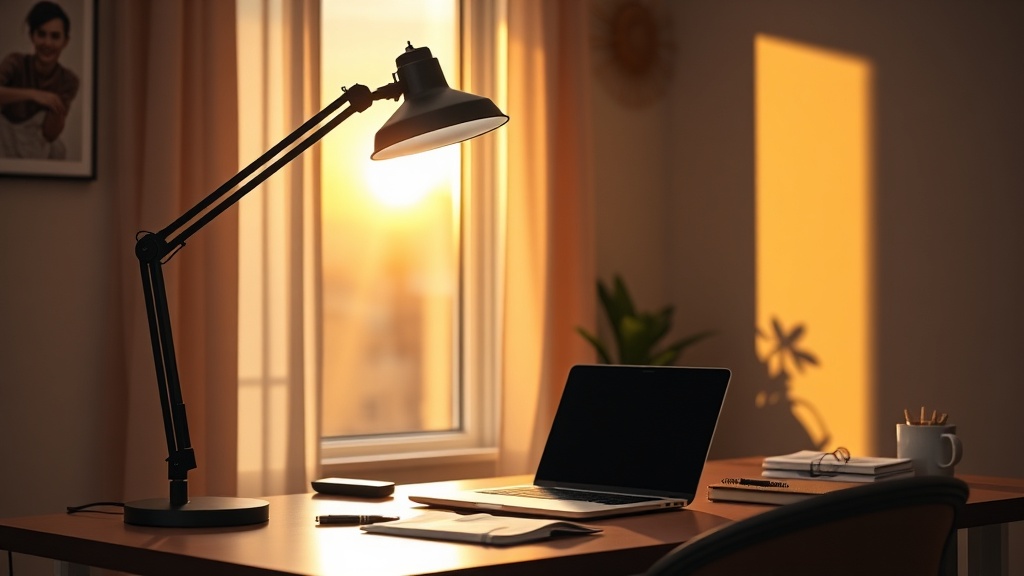
Place your workstation perpendicular to the nearest window. Direct sunlight behind you creates glare, while a side‑on angle lets diffused light spill across the screen without washing out colors. If your window faces east, start your day with bright, natural illumination; if it faces west, use a thin blackout curtain in the afternoon and rely on the tunable LED for consistent daylight.
Tip: A simple adjustable monitor hood can block stray glare without sacrificing the view.
What accessories help tame glare and flicker?
Glare‑reducing screen filters and matte desk mats are cheap (<$10) fixes that cut reflections from windows and overhead fixtures. For flicker, invest in a flicker‑free monitor or enable the “low‑blue‑light” mode on existing screens during late‑afternoon sessions.
Why does circadian‑aligned lighting matter for productivity?
Our brains are wired to respond to light cues. When the light spectrum mimics the outdoor environment, cortisol spikes naturally, sharpening focus and improving short‑term memory. Conversely, a dim or overly warm office can lull you into a “post‑lunch slump” even if you’ve had caffeine.
Is there a measurable impact on work output?
In a 2022 study from the Lighting Research Center, participants who used 5000 K LEDs for three hours a day completed tasks 12 % faster and reported a 15 % boost in mood compared to those stuck with 3000 K lighting. The effect was strongest in the first two weeks after the daylight‑saving shift, exactly when many of us feel the most off‑kilter.
How can I maintain these lighting habits long‑term?
Automation is your friend. Set up a daily schedule in your smart‑bulb app to switch to “focus” mode at 9 am and “relax” mode after 6 pm. Pair it with a reminder in your calendar to wipe dust off your lamp lenses—dust reduces luminous efficacy by up to 20 %.
What’s the low‑maintenance routine?
Every Friday, spend two minutes checking that your bulbs are still on the intended color temperature and that no new glare sources (like a new plant) have crept into the line of sight. This tiny habit keeps the lighting ecosystem humming without a full‑blown audit.
What’s the one thing you should do right now?
Grab a tunable‑color LED bulb, set it to 5000 K, and place your desk perpendicular to the nearest window. In the next 30 minutes you’ll notice a clearer screen, steadier focus, and a mood lift that feels like a silent productivity hack—no hype, just practical plumbing.
Related Reading
- Daylight Saving Time 2026: Reset Your Circadian Rhythm — How the clock change affects sleep and alertness.
- Embracing Bio‑Harmony: Sync Lifestyle with Your Circadian Clock — A deeper dive into circadian science for busy professionals.
- Spring Refresh: Low‑Cost Biophilic Design Ideas for 2026 — Adding plants and natural light to boost well‑being.