Dashcams in 2026: What Fleet Managers Know That Consumer Buyers Don't

Dashcams in 2026: What Fleet Managers Know That Consumer Buyers Don't
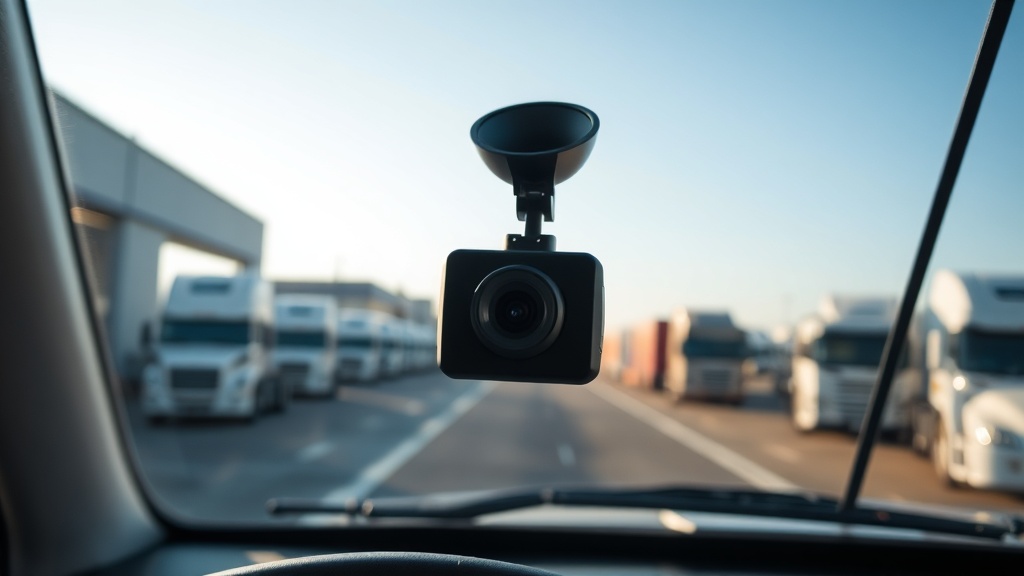
I managed a fleet of 140 vehicles across three Midwest distribution hubs. Every single one had a dashcam. Not because the company liked spending money on cameras — because the cameras paid for themselves within four months through reduced fraudulent claims and faster insurance resolution.
Now I watch consumer dashcam reviews on YouTube, and they spend twelve minutes on "4K resolution" and "night vision quality" while ignoring the three things that actually determine whether your dashcam footage is usable when you need it. So let me bridge that gap.
The Resolution Trap
Consumer reviewers obsess over sensor resolution. 4K! 60fps! HDR! And look, I get it — the footage looks gorgeous on a monitor. But here is the question nobody asks: can you read a license plate at 50 feet in your footage?
Car and Driver's 2026 testing showed that even top-tier units like the Viofo A329S — which produces genuinely excellent 4K footage — start losing plate legibility around 25-50 feet depending on conditions. A $150 camera with a good sensor and proper bitrate settings will capture a readable plate at 15 feet just as well as a $440 unit. The question is whether that extra range of legibility matters for your specific driving context.
In fleet operations, we learned that bitrate matters more than resolution. A 1080p camera recording at 20Mbps captures more useful detail than a 4K camera compressing its footage down to 12Mbps to fit on a smaller SD card. The compression artifacts eat the exact details you need — edge contrast on license characters, road sign text, the color of the other vehicle.
When shopping, check the bitrate setting, not just the headline resolution number. If the spec sheet does not list bitrate, that is usually not a good sign.
Storage Math That Nobody Does
Here is where fleet experience diverges most sharply from consumer advice. Every review says "buy a 256GB card and you're set." Set for what?
At 4K/30fps with reasonable bitrate, you will fill a 256GB card in roughly 12-14 hours of driving. Most dashcams use loop recording — when the card fills up, it overwrites the oldest files. That means if you commute an hour each way and something happens in the morning, your evening commute may have already overwritten the relevant footage by the time you get home.
Fleet systems solve this three ways that consumer buyers should steal:
- Event-locked files. When the G-sensor triggers (a hard brake, an impact), that file gets locked and excluded from the overwrite loop. Every decent consumer cam does this, but many ship with the sensitivity set too low. Crank it up. False positives are free; missed events are not.
- Cloud backup of events. Fleet cams from Motive and Geotab upload flagged events to the cloud in near real-time over cellular. Consumer equivalent: get a cam with Wi-Fi that auto-syncs flagged clips to your phone. The Vantrue E1 Pro does this reasonably well.
- Redundant storage. The Viofo A329S actually got this right — it can record simultaneously to an SD card and an external SSD via USB-C. That is a fleet-grade feature in a consumer package, and it is the main reason I would pay the premium for that unit.
Parking Mode: The Feature Nobody Configures Correctly
Most mid-range dashcams in 2026 offer parking mode — the camera stays active when the car is off, watching for impacts or motion. In theory, great. In practice, I have seen this feature drain car batteries in cold weather more times than I can count.
Fleet operations taught me this: if you want reliable parking mode, you need a hardwire kit with a voltage cutoff. The camera draws power directly from the car's electrical system, and the cutoff kills power before the battery drops below the threshold needed to start the engine. Most kits cut off at 11.8V for 12V systems.
The consumer advice usually stops at "buy a hardwire kit." The fleet advice continues: test the cutoff in winter. Cold batteries have lower resting voltage. Your car sitting in a Chicago parking garage at -10°F might already be hovering at 12.1V with a healthy battery. A cutoff set at 11.8V gives you almost no buffer. Either raise the cutoff threshold or accept that parking mode is a three-season feature in cold climates.
The Insurance Angle Nobody Quantifies
Fleet managers justify dashcam investment with hard numbers. A single disputed at-fault claim can cost $5,000 to $15,000 in increased premiums over three years. One exoneration pays for every camera in a small fleet.
For individual drivers, the math is simpler but still compelling. A $200 dashcam that prevents one wrongly-assigned at-fault accident over its three-year lifespan has an ROI that most investments cannot touch. Some insurers — Progressive and State Farm among them — offer small discounts for dashcam users, though the discount alone does not justify the purchase. The liability protection does.
What fleet managers also know: footage quality standards for legal proceedings are lower than you think. Courts and insurance adjusters do not need cinematic 4K. They need clear enough footage to establish position, speed, and sequence of events. A properly mounted 1080p camera with accurate timestamps handles that.
What I Would Actually Buy
If you have made it this far, you probably want a specific recommendation. Fair enough.
For most people: The Vantrue E1 Pro at roughly $150-170. Good 2K sensor, built-in Wi-Fi for clip transfer, solid app, voice control that actually works. It does what a dashcam needs to do without the complexity tax of a premium unit.
If parking mode matters to you: The Viofo A329S at around $400, paired with their hardwire kit. The SSD recording option means you are not gambling with SD card reliability in extreme temperatures, and the voltage cutoff in the Viofo hardwire kit is configurable. It is the closest thing to a fleet-grade setup in a consumer form factor.
If you just want something installed and forgotten: The Miofive S1 around $80-100. It is not going to win resolution competitions, but it records reliably, the loop recording works correctly, and it has a capacitor instead of a battery — which means it handles temperature extremes better than units with lithium cells. I ran capacitor-based units in our unheated trailers for years. They outlasted every battery-based camera we tried.
The So-What
Consumer dashcam reviews grade cameras like they grade action cameras — on image quality, features, and app polish. Fleet managers grade them on three things: does the footage survive to be retrieved, is it clear enough to settle a dispute, and does the unit operate without babysitting across temperature extremes and months of continuous use.
Those are the questions worth asking before you spend a dollar. Resolution is the last thing on the list, not the first.