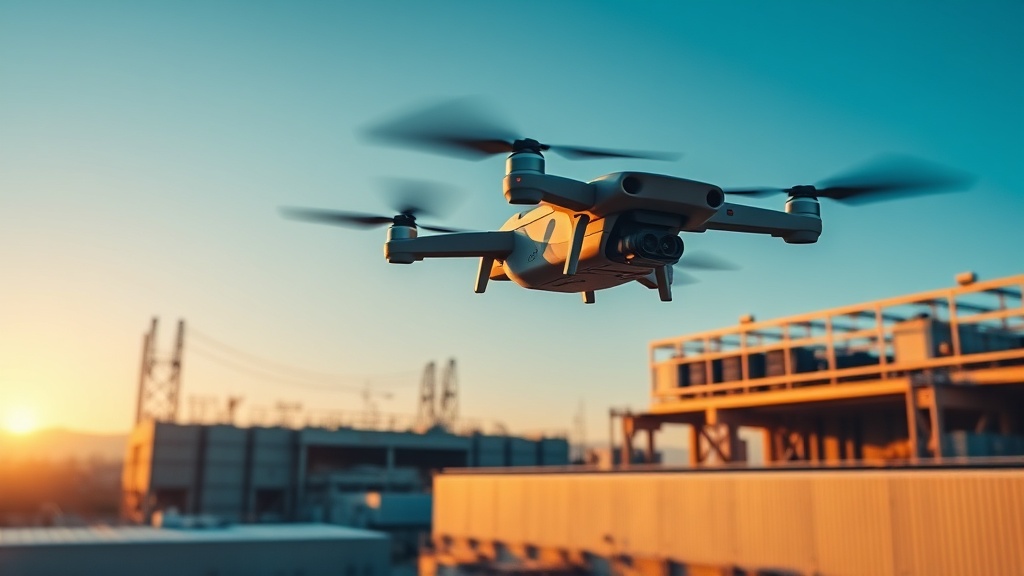
BVLOS Drone Delivery Gets Green Light in 2026: What It Means for Warehouses

Hook: The sky’s no longer the limit—U.S. and European regulators finally gave the green light for beyond‑visual‑line‑of‑sight (BVLOS) drone deliveries in 2026. That means your warehouse could be launching packages from the roof tomorrow.
Context: For years, the promise of drone‑powered last‑mile logistics has been stalled by tangled regulations. With the FAA and EASA clearing the BVLOS hurdle, the logistics world is about to see a shift that could cut delivery costs by up to 70%.
What Exactly Is BVLOS and Why Does It Matter?
BVLOS allows drones to operate beyond the pilot’s line of sight, using onboard sensors and AI to navigate safely. Until now, pilots had to keep the aircraft in visual range, limiting range and payload. The new rules let drones fly longer routes, carry heavier loads, and integrate with warehouse management systems.
Which Regulators Just Approved BVLOS?
- FAA (U.S.) — In March 2026, the FAA issued Part 108 amendments that streamline BVLOS waivers for commercial operators.
- EASA (Europe) — The European Union Aviation Safety Agency released its BVLOS framework in April 2026, aligning with the U.S. approach and enabling cross‑border drone flights.
"These changes unlock the real potential of drone logistics," says John Kelley, Director of Drone Operations at DHL Wing (source: Hotbot article).
How Will This Impact Warehouse Operations?
- Faster Last‑Mile Fulfillment — Drones can bypass traffic, delivering to urban balconies in minutes. Walmart’s recent expansion to 150 more stores demonstrates scalability (SupplyChain247).
- Reduced Floor Space Needs — With aerial dispatch, you can shrink loading dock footprints, freeing up square footage for inventory.
- New Data Streams — BVLOS flights generate telemetry that feeds into predictive maintenance AI, linking back to our earlier post on The Last‑Mile AI Problem.
- Regulatory Compliance Costs — Expect initial certification fees and ongoing reporting, similar to the compliance overhead we covered in EU AI Act Compliance 2026.
What Are the Immediate Challenges?
- Infrastructure Gaps — Reliable 5G or Wi‑Fi 7 connectivity is still uneven in many industrial zones. Our piece on Warehouse Connectivity Strategy 2026 dives deeper.
- Safety & Public Perception — Communities demand clear flight paths and noise mitigation. Companies are investing in geo‑fencing and acoustic dampening.
- Payload Limits — Current BVLOS‑approved drones top out at ~5 kg, suitable for small parcels but not bulk freight.
Bottom Line: Should You Start Planning Now?
If your warehouse already uses edge AI for robotics (see Edge AI in Warehouse Robotics 2026) or you’re eyeing a 5 Emerging AI Tools Transforming Inventory Management in 2026, integrating BVLOS drone dispatch is a logical next step.
Takeaway: The regulatory green light is here, but success will depend on solid connectivity, safety protocols, and a clear ROI model. Start mapping out a pilot—maybe a single rooftop launch pad—to test the waters before scaling.
Related Reading
- The Last‑Mile AI Problem: Why Algorithms Fail When They Leave the Hub — Understanding the AI side of delivery.
- Warehouse Connectivity Strategy 2026: Wi‑Fi 7 vs Private 5G — Ensuring your drones stay online.
- EU AI Act Compliance 2026: Infrastructure Beats Model Hype — Navigating the compliance landscape.
<meta.faqs>
[
{"question": "What does BVLOS stand for?", "answer": "BVLOS means Beyond‑Visual‑Line‑of‑Sight, allowing drones to fly without the pilot keeping them in direct sight."},
{"question": "When did the FAA approve BVLOS for commercial use?", "answer": "The FAA issued Part 108 amendments in March 2026, streamlining BVLOS waivers for commercial operators."},
{"question": "Can BVLOS drones carry large parcels?", "answer": "Current BVLOS‑approved models handle up to about 5 kg, making them ideal for small parcels but not bulk freight."}
]
</meta.faqs>