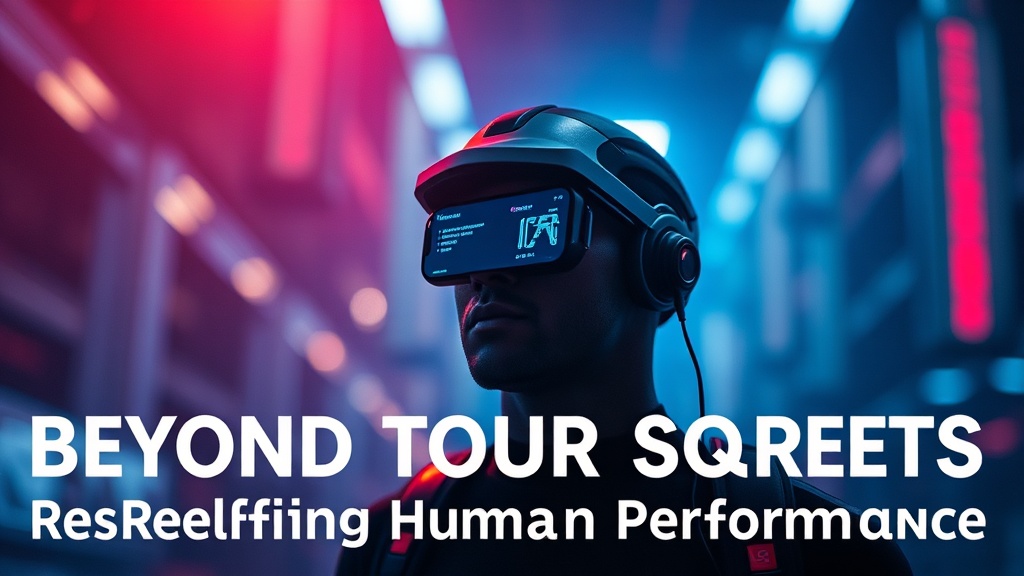
Beyond the Screen: 7 Wearable Gadgets Redefining Human Performance

The Metabolic Intelligence Ring
Neural-Link Headbands for Deep Focus
Smart Contact Lenses for Augmented Reality
Continuous Glucose Monitoring Wearables
Advanced Hydration Tracking Patches
Stress-Responsive Haptic Bracelets
AI-Driven Sleep Optimization Earbuds
Most people believe that "wearable tech" is synonymous with the smartwatch—a glorified notification center strapped to your wrist that tells you to stand up after an hour of sitting. This is a fundamental misunderstanding of the current trajectory of human performance hardware. We are moving past the era of passive monitoring (telling you what happened) and entering the era of active physiological intervention (changing what happens). The goal is no longer just to count steps; it is to optimize the biological machine through real-time data and sensory feedback.
The hype cycle often focuses on aesthetic design or social connectivity, but for anyone actually interested in performance, those are secondary metrics. The real question is: Does this device provide actionable data that results in a physical or cognitive change? If a device tells you your heart rate is high but offers no mechanism to lower it or prevent the spike, it is just a digital thermometer. The following seven categories of wearables represent the shift from mere tracking to genuine human optimization.
1. Continuous Glucose Monitors (CGM) for Non-Diabetics
For decades, continuous glucose monitoring was a niche medical tool reserved for Type 1 diabetics. Today, devices like the Dexcom G7 and Abbott FreeStyle Libre are being repurposed by high-performance athletes and biohackers to understand metabolic flexibility. The value here isn't just about avoiding a sugar crash; it is about understanding how specific macronutrient ratios affect your energy stability throughout the day.
When you wear a CGM, you stop guessing and start knowing. For example, a runner training in the heat of Phoenix might notice a significant glucose dip following a high-carb meal that wasn't actually absorbed efficiently, leading to a "bonk" mid-run. By analyzing these curves, you can adjust your fueling strategy—shifting from simple sugars to complex carbohydrates—to maintain steady output. The "so what" is clear: you are no longer eating for taste; you are eating for sustained metabolic throughput.
2. Smart Rings: The Subtle Data Collector
The primary failure of the smartwatch is the "friction of presence." A bulky watch is a distraction during deep work or heavy lifting. The Oura Ring Gen3 and the Ultrahuman Ring AIR solve this by moving the sensors to the finger, where blood flow and temperature readings can be more precise. These devices focus heavily on the most critical pillar of performance: recovery.
A smart ring doesn't just track sleep; it tracks Heart Rate Variability (HRV). High HRV is a marker of a resilient nervous system, while low HRV suggests you are overtrained or under-recovered. If your Oura Ring reports a significant drop in readiness, the actionable response is to pivot your training intensity. Instead of a heavy squat session at the local gym, you opt for a mobility-focused recovery day. This prevents the long-term burnout that many high-achievers suffer from because they ignored the subtle signals of physiological stress.
3. Neurostimulation Headsets
Cognitive performance is often treated as a nebulous concept, but the hardware is becoming increasingly granular. Devices like the Flow Neuroscience headset or Sensate are moving toward non-invasive neuromodulation. These aren't just "brain trainers"; they are tools designed to influence brainwave states through electrical stimulation or vagus nerve activation.
The objective is to manipulate the transition between states—moving from the high-beta waves of intense focus to the alpha or theta waves required for deep sleep. For a professional working in a high-stress environment, a device that can stimulate the vagus nerve to trigger a parasympathetic response can be the difference between a productive afternoon and a cortisol-induced meltdown. The technology is moving from "monitoring the brain" to "tuning the brain."
4. Smart Eyewear and Visual Optimization
We spend a significant portion of our lives staring at screens, often at the expense of our visual ergonomics and circadian rhythms. While "smart glasses" often focus on Augmented Reality (AR) displays, the performance-oriented sector is focusing on light management. Brands like Ra Optics and various high-end blue light filtering technologies are more than just marketing gimmicks; they are tools for managing the melanopsin cells in your eyes.
If you are working late on a project, the blue light emitted by your monitor suppresses melatonin production, delaying your ability to enter deep sleep cycles. By utilizing specialized eyewear, you are physically managing your light exposure to protect your sleep architecture. This is a direct link between your digital environment and your biological recovery. If you are already optimizing your workspace, you might find it useful to review our guide on mastering dark mode for better eye comfort to further reduce digital strain.
5. Smart Apparel and Biometric Compression
The next frontier of wearables isn't a device you carry, but the clothing you wear. Companies like Whoop (via their integrated sensor ecosystem) and specialized compression brands are embedding sensors directly into textiles. This allows for the tracking of muscle activation patterns and postural alignment during movement.
Standard wearables can tell you that you walked 10,000 steps, but smart apparel can tell you that your left glute is not firing correctly during a deadlift, leading to a compensatory pattern in your lower back. This level of data moves the conversation from "general fitness" to "biomechanical efficiency." When you can see the data on how your body moves through space, you can correct form in real-time, preventing the repetitive strain injuries that plague long-term athletes.
6. Smart Insoles and Gait Analysis
Footwear is the foundation of human movement, yet it is often the most overlooked aspect of performance. Smart insoles, such as those developed by Digitsole, integrate sensors that track pressure distribution, strike patterns, and balance. This is critical for anyone engaged in high-impact activities like long-distance running or tactical training.
A common issue in running is overpronation, which can lead to shin splints or knee issues. A standard fitness tracker won't catch this, but a smart insole provides a heat map of your foot strike. By identifying exactly where the pressure is uneven, you can make informed decisions about shoe selection or physical therapy. The "so what" is the longevity of your joints; you are using data to ensure your foundation remains intact under load.
7. Advanced Thermoregulation Wearables
Temperature regulation is a fundamental physiological process that, when optimized, can drastically improve both recovery and performance. We are seeing a rise in wearable tech designed to manage thermal stress, such as the Embr Wave. This device uses thermoelectric cooling and heating to provide localized temperature control.
This is particularly relevant for managing the "thermal spike" that often occurs during the transition to sleep. A drop in core body temperature is a primary trigger for sleep onset. By using a device to manage this thermal transition, you are working with your biology rather than against it. Whether it is cooling down after an intense workout in a humid environment or warming up during a cold morning commute, these devices provide a level of environmental control that was previously impossible without heavy, cumbersome gear.
The Bottom Line: Data vs. Insight
The common thread across all these technologies is the move from data collection to insight generation. A piece of hardware that simply reports a number is a toy. A piece of hardware that tells you to change your behavior, adjust your environment, or modify your training is a tool.
As you evaluate these gadgets, ignore the sleek marketing and the "lifestyle" branding. Look at the sensor accuracy, the latency of the data, and most importantly, the actionable output. If the device doesn't tell you what to do next, it isn't redefining your performance—it's just adding to the noise.