
AI Assistants Aren’t Replacing Your Job—They’re Restructuring It From the Plumbing Up

Let’s pull the thread on this whole “AI is coming for your job” narrative.
The headlines are loud, the demos are polished, and the timelines are—predictably—optimistic. But if you’ve spent any time in a real operational environment, you know how this usually plays out. Technology doesn’t walk in and fire people. It changes the shape of the work, usually in ways that are invisible until something breaks.
So instead of asking whether AI replaces jobs, let’s ask a better question: what does it do to the plumbing of your day-to-day work?

The Reality: AI Targets Tasks, Not Roles
The reality? Jobs are bundles of tasks. Some are repetitive. Some require judgment. Some exist purely because a system somewhere else is inefficient.
AI doesn’t replace the entire bundle—it strips out specific layers.
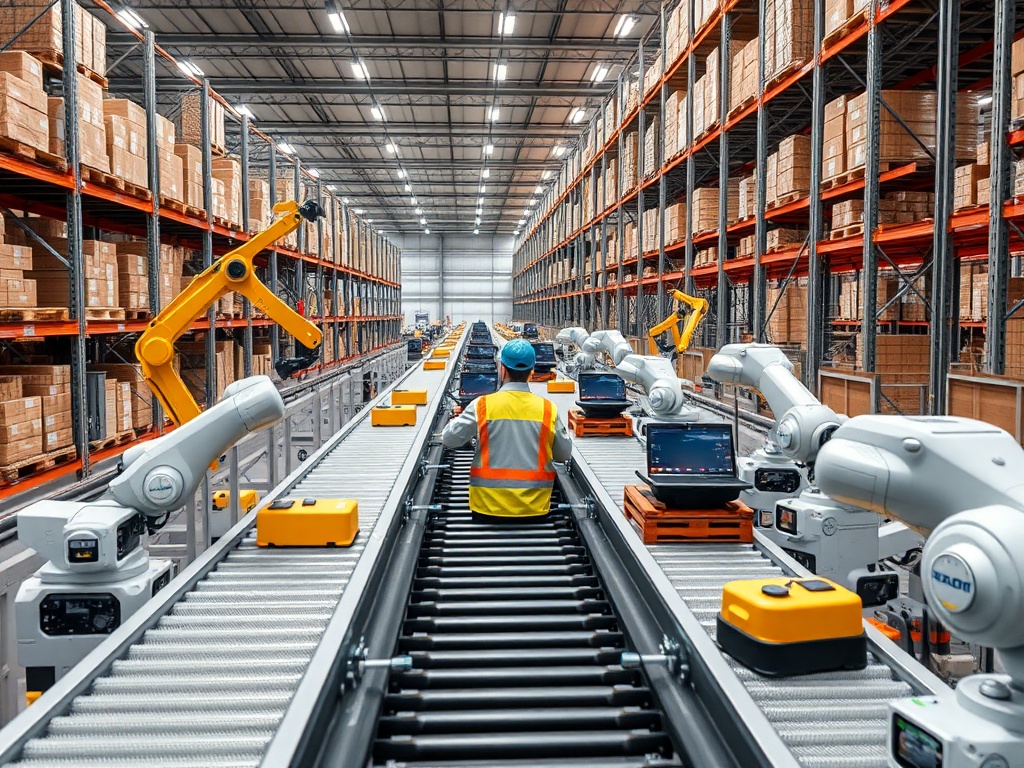
Think of it like upgrading a warehouse conveyor system. You don’t fire the entire staff. You remove the manual sorting step, which means fewer people touching boxes—but more people monitoring flow, handling exceptions, and maintaining uptime.
Same principle here.
Most AI tools today are good at three things:
- Pattern recognition at scale
- Drafting first-pass outputs
- Reducing search and retrieval time
What they are not good at:
- Context that lives outside the dataset
- Accountability when something goes wrong
- Operating in messy, real-world environments
That gap is where your job evolves—not disappears.
Where the Work Actually Moves
Here’s what I’m seeing across industries—from logistics to marketing to finance.
1. The Middle Gets Compressed
Routine analysis, basic reporting, first-draft writing—that layer is getting thinner.
If your role was primarily moving information from point A to point B with light formatting in between, you’re standing on a shrinking island.
But—and this matters—that work doesn’t vanish. It gets absorbed upstream and downstream.
2. Upstream Thinking Becomes Valuable
Someone still needs to define the problem correctly.
Garbage inputs still produce garbage outputs—AI just does it faster and more convincingly.
So the ability to structure a problem, define constraints, and understand what “good” looks like becomes more valuable.
3. Downstream Accountability Expands
AI can generate a report. It can’t stand in a meeting and defend it when the numbers don’t line up with reality.
That responsibility shifts to humans.
You’re not just producing work anymore—you’re validating, stress-testing, and owning it.

The Incentive Structure (Follow the Money)
Whenever a new technology shows up, ignore the press releases and follow the incentives.
Companies adopt AI for one reason: cost efficiency.
Not innovation. Not transformation. Cost.
Here’s how that plays out in practice:
- Reduce time spent on low-value tasks
- Increase output per employee
- Delay hiring rather than trigger layoffs
That last one is important. Most companies aren’t firing half their staff overnight—they’re just not replacing people who leave.
It’s a slow squeeze, not a sudden drop.
So what?
If you’re early in your career, you’ll see fewer entry-level roles that exist purely for “learning by doing repetitive work.”
If you’re mid-career, your leverage comes from owning outcomes, not just producing deliverables.

The New Skill Stack (What Actually Matters Now)
Let’s translate this into something practical.
You don’t need to become an AI engineer. You need to understand where it fits into your workflow—and where it breaks.
1. Problem Framing
This is the upstream work.
Can you clearly define what needs to be solved, what constraints exist, and what success looks like?
If not, AI will happily produce something that looks right and is completely wrong.
2. Output Verification
Trust—but verify.
Every AI-generated output needs a human sanity check.
Think of it like automated quality control: fast, useful, but not infallible.
3. Workflow Integration
The real value isn’t using AI once—it’s embedding it into repeatable processes.
If you can reduce a 2-hour task to 20 minutes consistently, that’s where the leverage is.
4. Domain Knowledge
This is the moat.
AI can generate answers, but it doesn’t understand your specific business context unless you bring it in.
The more grounded your expertise, the more valuable you become.

The Impact Scorecard
Let’s grade AI assistants the same way we’d evaluate any tool on a warehouse floor.
- Accessibility: 8/10 — Tools are widely available and getting cheaper, though quality varies.
- Utility: 7/10 — Strong for specific tasks, weak in edge cases and real-world ambiguity.
- Longevity: 6/10 — Rapid iteration means today’s tools may be obsolete in 18 months.
Translation: useful, but not something you can build your entire career around without adapting.
No-Hype Translation
What the marketing says: “AI will transform how we work.”
What it actually means: Some tasks get faster, some roles get reshaped, and the people who understand the system gain leverage.
What the demo shows: A clean, perfect output.
What reality looks like: Iteration, correction, and edge cases that don’t fit the model.
What you should do Monday morning: Identify one repetitive task in your workflow and reduce it by 30% using available tools. Then measure if it actually holds up over a week.

The Bottom Line
AI isn’t a replacement layer—it’s a compression layer.
It squeezes inefficiency out of systems, which means fewer low-skill touchpoints and more emphasis on judgment, ownership, and integration.
If your work is purely mechanical, you’re exposed.
If your work involves defining problems, validating outputs, and navigating messy reality, you’re still in the loop—just with better tools.
The mistake is thinking this is about learning a tool.
It’s about understanding how the system is changing underneath you.
Look at the plumbing. That’s where the signal is.