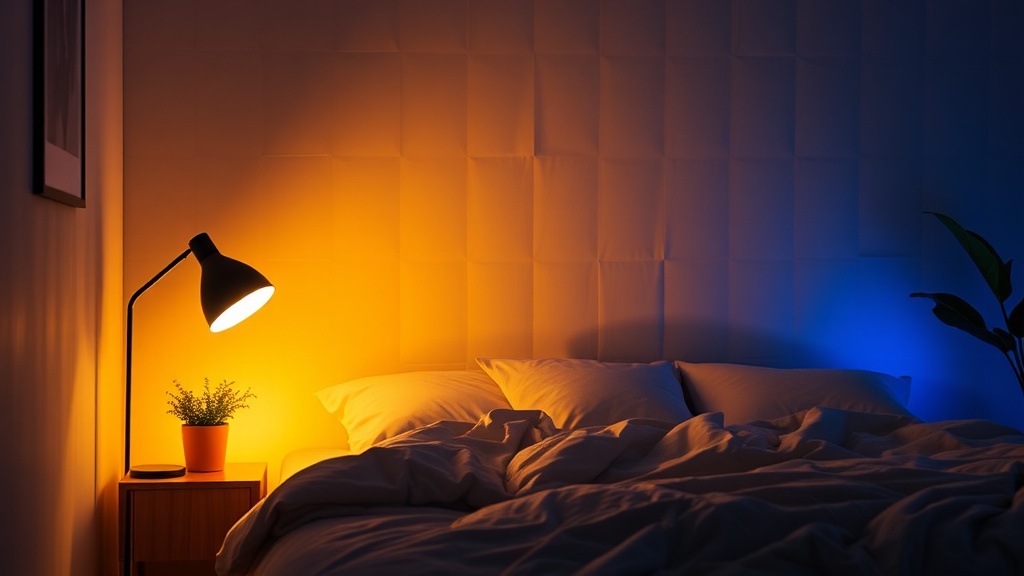
4 Best Smart Lighting Kits for Better Sleep and Focus

Philips Hue Ecosystem
Nanoleaf Shapes for Creative Energy
LIFX Colorful Ambient Strips
Govee Smart Home Solutions
The blue light from a smartphone screen at 11:00 PM isn't just a distraction; it is a physiological disruptor. It suppresses melatonin production and tricks your brain into thinking the sun is still up, leaving you wired when you should be crashing. This post evaluates four smart lighting kits designed to mitigate these effects by automating color temperature shifts and brightness levels. We are looking at how these systems can actually improve your circadian rhythm for better sleep and sharpen your focus during deep work sessions by providing the right light at the right time.
The Science of Light and Productivity
Before looking at the hardware, you need to understand the "so what" of light temperature. Light is measured in Kelvins (K). High Kelvin values (5000K–6500K) produce a bluish, crisp light that mimics daylight, which suppresses melatonin and boosts cortisol. This is excellent for high-intensity focus but terrible for winding down. Low Kelvin values (2000K–2700K) produce a warm, amber glow that signals to your brain that it is time to rest. A truly effective smart lighting setup doesn't just change colors for aesthetics; it automates this transition so you don't have to remember to dim the lights manually.
If you are already optimizing your environment, you might be looking at how your lighting interacts with your peripheral gear. For instance, if you are building a minimalist desk setup for deep work, the quality of your task lighting is just as important as the ergonomics of your chair. A poorly timed light can break your flow state just as easily as a notification.
1. Philips Hue White and Color Ambiance Starter Kit
Philips Hue remains the gold standard in the smart lighting industry, not because it has the most features, but because its reliability is unmatched. While many budget brands suffer from "ghosting" (where lights flicker or stay slightly on even when "off"), Hue maintains a consistent connection to its bridge.
Performance for Sleep and Focus
The Hue system excels at the "Natural Light" scene. Through the Hue app, you can program a gradual transition from high-intensity cool white in the morning to a soft, warm amber in the evening. For focus, the ability to set a specific "Concentrate" mode—which utilizes a high-intensity, neutral white light—helps prevent the midday slump. For sleep, the "Read" setting provides a non-intrusive warmth that doesn't trigger the same level of blue light exposure as a standard LED bulb.
Technical Specifications and Reality Check
- Connectivity: Zigbee protocol (requires the Hue Bridge). This is a crucial distinction; it doesn't clutter your Wi-Fi network like cheaper bulbs do.
- Color Accuracy: High. The transitions between color temperatures are smooth, avoiding the jarring "jumps" seen in cheaper competitors.
- The Downside: The price premium is significant. You are paying for the ecosystem and the stability of the Zigbee connection. If you only want one or two bulbs, this is overkill.
2. Nanoleaf Essentials Matter Kit
If you want to move away from standard bulb-and-socket setups and integrate light directly into your wall geometry, Nanoleaf offers a more architectural approach. The Essentials Matter Kit focuses on the new Matter standard, which is designed to ensure interoperability across different smart home ecosystems.
Performance for Sleep and Focus
Nanoleaf’s strength lies in its ability to provide ambient, indirect light. Instead of a harsh overhead light hitting your eyes, these panels or strips bounce light off walls, creating a soft glow. This is ideal for the "wind-down" phase of your evening. During work hours, the panels can be set to a bright, consistent light that fills the room without the glare associated with direct-view LEDs. This reduces eye strain during long coding or writing sessions.
Technical Specifications and Reality Check
- Connectivity: Matter over Thread. This is the cutting edge of smart home tech, ensuring low latency and high reliability if you have a compatible hub (like an Apple HomePod or certain Google Nest devices).
- Customization: Extremely high. You can program specific light paths or gradients that feel more organic than a standard bulb.
- The Downside: Installation can be finctor. Unlike a bulb that you simply screw in, these require physical mounting and careful placement to achieve the desired light dispersion.
3. Govee RGBIC Smart Light Strips
Govee is the "value" option that actually delivers. While the professional crowd might scoff at budget brands, Govee has mastered the art of the RGBIC (Reduced Green, Blue, Red, Integrated Circuit) technology. This allows multiple colors to be displayed on a single strip simultaneously, rather than the entire strip being one single color at a time.
Performance for Sleep and Focus
For focus, the RGBIC technology allows you to create a "gradient" of light. You can have a cool blue light at the top of your desk area and a warmer light toward the back, which can help define your workspace. For sleep, Govee’s "Sunset" mode is particularly effective. It mimics the gradual descent of the sun, transitioning from bright light to deep oranges and reds, which is a proven way to prepare the body for sleep. It is much more effective than just turning off a lamp.
Technical Specifications and Reality Check
- Connectivity: Wi-Fi and Bluetooth. Most models connect directly to your router, making them easy to set up without an extra hub.
- Color Depth: The RGBIC technology provides much better visual depth than standard RGB strips, making the light feel less "cheap" and more professional.
- The Downside: The app experience can be cluttered. There are many features and "modes" that feel unnecessary, and the setup process can occasionally be finicky with certain Wi-Fi configurations.
4. Lifx Color Bulb Kit
Lifx occupies a unique middle ground between the high-end Philips Hue and the budget-friendly Govee. Their bulbs are known for being incredibly bright—often outperforming Hue in raw lumen output—and having a highly saturated color palette.
Performance for Sleep and Focus
Because Lifx bulbs are exceptionally bright, they are the best choice for a dedicated workspace where high visibility is a requirement. If you find yourself squinting at a monitor or physical documents, the high lumen output of a Lifx bulb can solve that. For the sleep transition, the brightness can be dialed down to very low levels without the light becoming "jittery" or flickering, which is a common issue with low-quality dimmable LEDs.
Technical Specifications and Reality Check
- Connectivity: Direct Wi-Fi. No hub is required, which simplifies the setup for a single room or a small office.
- Brightness: Superior to most competitors in this list. This makes them highly versatile for both task lighting and ambient lighting.
- The Downside: Since they connect directly to Wi-Fi, they are more susceptible to network congestion. If you have 50+ smart devices on a standard consumer router, you may experience connectivity drops.
Summary Comparison Table
| Product | Best For | Primary Connection | Key Strength |
|---|---|---|---|
| Philips Hue | Reliability & Ecosystem | Zigbee (Hub required) | Unmatched stability and smooth transitions. |
| Nanoleaf | Architectural Ambiance | Matter/Thread | Indirect, soft light for better sleep prep. |
| Govee | Budget & Visual Flair | Wi-Fi/Bluetooth | Dynamic color gradients at a low price. |
| Lifx | High-Intensity Task Lighting | Wi-Fi | Highest brightness and color saturation. |
Final Verdict: Which One Should You Buy?
Choosing the right kit depends entirely on your existing infrastructure and your specific pain point. If you are a power user who wants a system that "just works" and you don't mind the extra cost of a bridge, buy the Philips Hue. It is the safest bet for a professional environment.
If you are a developer or a creative who wants to integrate lighting into the very aesthetic of your room, and you want to be future-proofed with the Matter standard, go with Nanoleaf. It treats light as a design element rather than just a utility.
For those who want to experiment with light without breaking the bank, or if you want a highly dynamic, colorful environment for a gaming/work hybrid setup, Govee is the clear winner. It offers the most "bang for your buck" in terms of visual complexity.
Finally, if your main issue is insufficient light during the day—meaning you need a bright, powerful light to stay focused—and you want a simple setup without an extra hub, the Lifx kit will provide the raw power you need to stay productive.